



Guest Lecture: Lawrence Lessig on the Challenges of Artificial Intelligence to the U.S. Political System
Date:2025-07-15
On the morning of July 8, 2025, Professor Lawrence Lessig, a renowned contemporary legal scholar and Roy L. Furman Professor of Law and Leadership at Harvard Law School, delivered an academic lecture entitled “Artificial Intelligence and Democratic Politics” at the Lecturer Hall of the Koguan Building, Peking University Law School (PKULS).
The event was a special session of the Summer School on “Theoretical Perspectives and Practical Frontiers of Digital Rule of Law”, jointly organized by Peking University Law School and the Center for Digital Rule of Law, Peking University, with support from PKULaw, and was livestreamed on the “Fabao Classroom” platform. The lecture was moderated by Dai Xin, Vice Dean and Associate Professor with Tenure, PKULS. Zhang Linghan, Professor at the Institute of Digital Rule of Law, China University of Political Science and Law, and Hu Ling, Associate Professor at PKULS, served as discussants. More than 160 students, scholars, and legal practitioners from inside and outside the University attended the event.
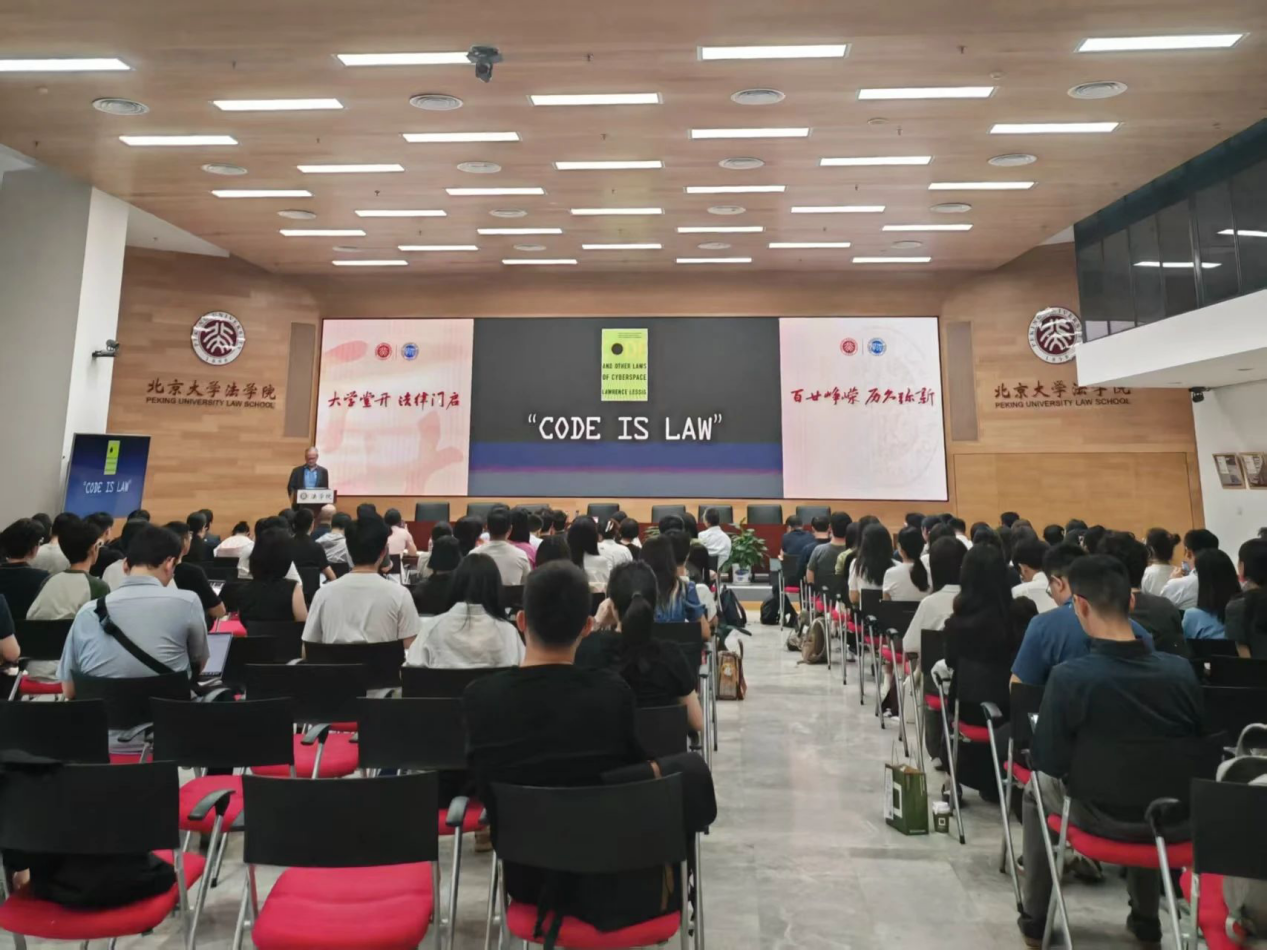
Professor Lessig began his lecture by referring to his widely known book Code and its theory of multiple modalities of regulation, noting that the proposition “Code is Law” has increasingly been reduced to a slogan and misinterpreted in popular discourse. He stressed that the claim does not mean that those who control code or technology should be free to act without constraint or to create their own laws; rather, it underscores that code, in practice, regulates behavior in ways comparable to law. Such regulation, however, is not necessarily lawful or normatively justified--just as statutes enacted by Congress or the government may themselves be unconstitutional.
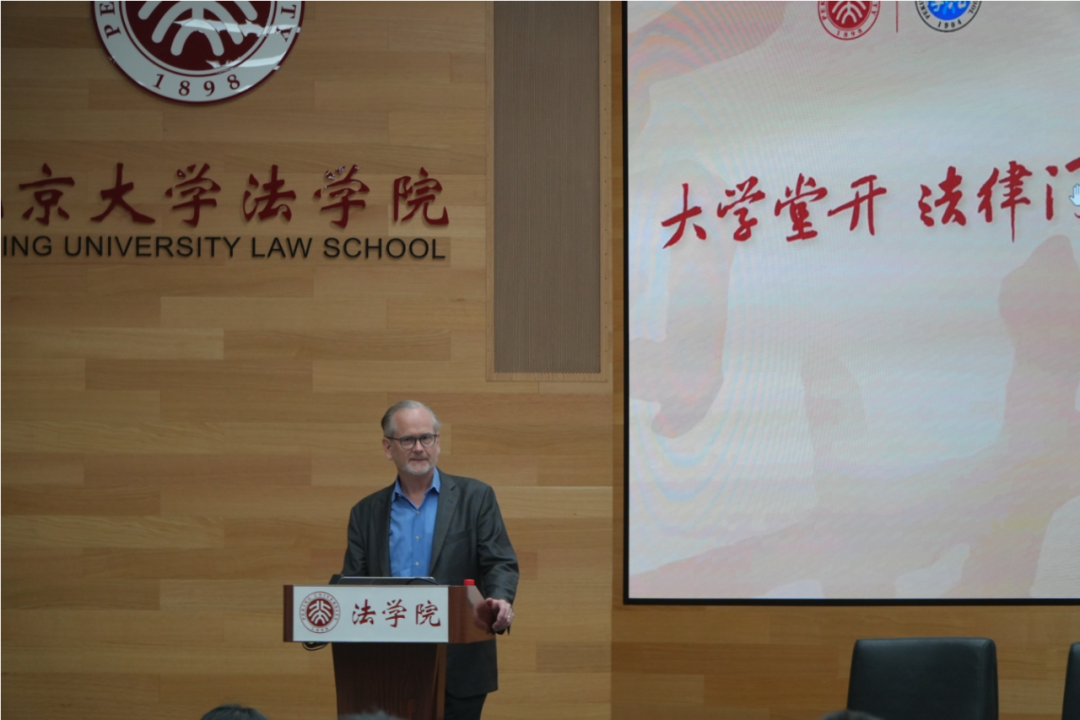
Lessig further argued that in the United States, the market has in fact become the most powerful regulatory force, surpassing law, social norms, and code. The commercial models underlying technology companies, particularly those driven by advertising and traffic, lie at the root of the crisis facing the U.S. political system. Beyond the deliberate manipulation of public opinion through artificial intelligence, these business models have unintentionally undermined a core social precondition for the effective functioning of classical democracy: a shared public understanding of key facts. As individuals increasingly inhabit algorithmically curated “realities,” political division and polarization intensify, potentially leading to crises such as the January 6, 2021, attack on the U.S. Capitol.
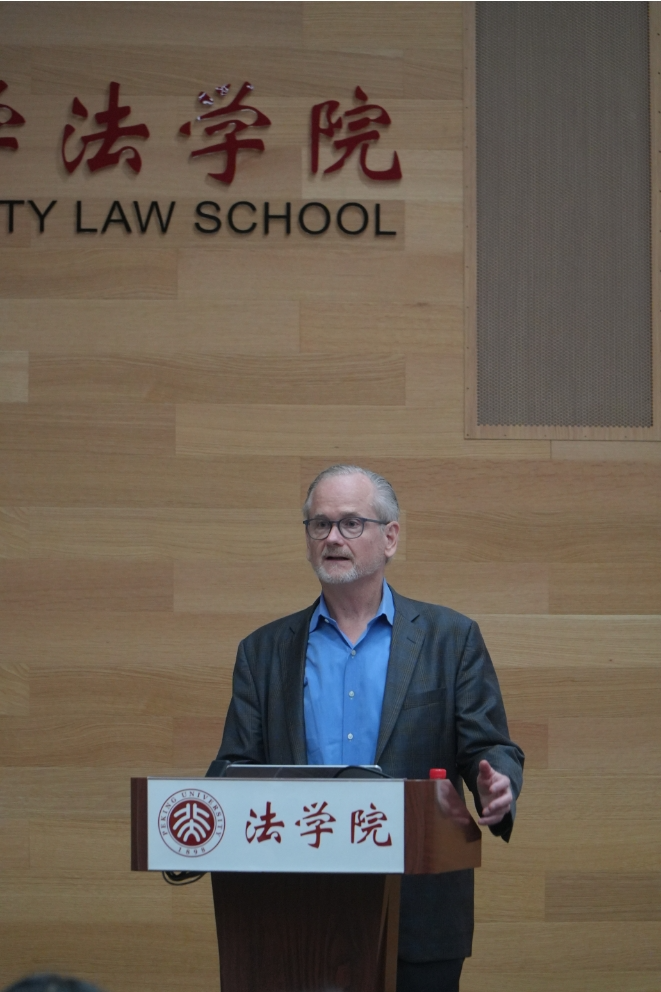
Professor Lessig further observed that artificial intelligence should be understood within a broader historical and theoretical framework: as part of humanity’s long-standing efforts to create “artifacts” that serve human purposes. However, the growing instrumental rationality of such artifacts often makes them difficult to control. He warned that emerging AI technologies may intensify existing risks if political systems fail to constrain technological power, and suggested policy responses including targeted taxation, enhanced protections for minors, strengthened corporate disclosure obligations, and the incorporation of civic deliberation mechanisms to complement traditional electoral systems.
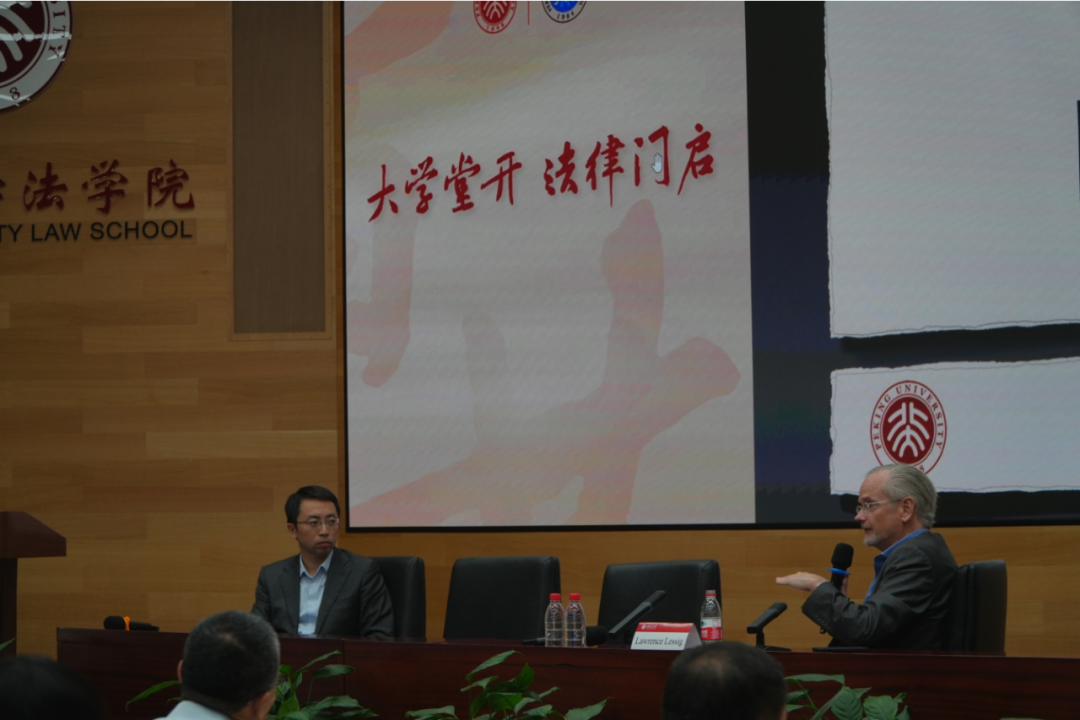
During the discussion session, Dai Xin reflected on the widespread misinterpretation of the “Code is Law” thesis and linked Professor Lessig’s observations to the tension between market-driven code and traditional legal regulation. Zhang Linghan highlighted cross-cultural differences in perceptions of AI-related risks, noting that in China, public concern tends to focus more on practical value and social benefits than on political impact. Hu Ling emphasized that artificial intelligence amplifies structural issues inherent in the internet, calling for a more fundamental rethinking of how technology should serve human development. In his concluding remarks,
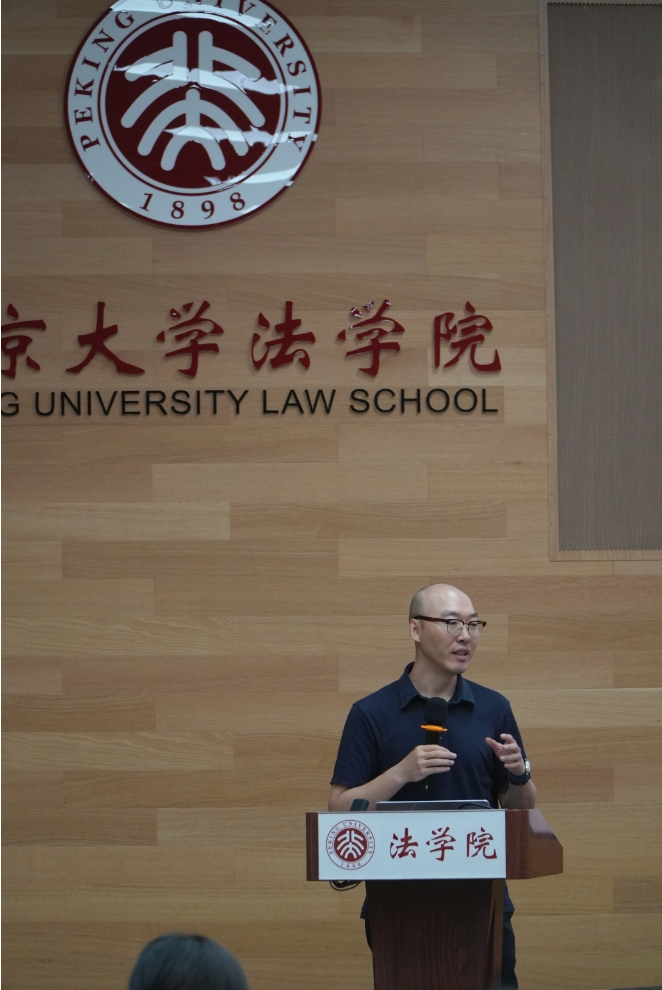
Professor Lessig thanked the discussants and shared reflections based on his long-term observation of Chinese and American societies. While acknowledging current challenges, he expressed cautious optimism, suggesting that grassroots practices and community-based connections may help preserve core values for future generations.
Following audience Q&A, the lecture concluded successfully.
Translated by: Ma Zihan
Edited by: Shi Xiaoyu