



Dr. Christophe Bernasconi: HCCH and its Ongoing Work, with a Focus on Transnational Litigation
Date:2025-12-06
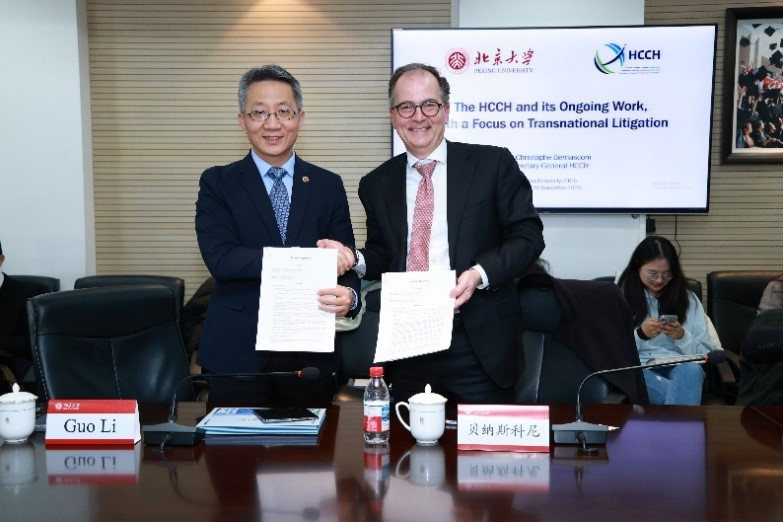
On the afternoon of November 28, 2025, Dr. Christophe Bernasconi, Secretary General of the Hague Conference on Private International Law (HCCH), delivered an academic lecture titled “The HCCH and its Ongoing Work, with a Focus on Transnational Litigation.” The event was chaired by Prof. He Qisheng, Boya Distinguished Professor of Peking University Law School (PKULS). Panelists included Prof. Wu Yong, Executive Dean of the Law School at the University of Chinese Academy of Social Sciences; Prof. Cao Zhixun, tenured A.P. of PKULS; and Mr. Zhao Yun, Representative of the HCCH Asia-Pacific Regional Office.
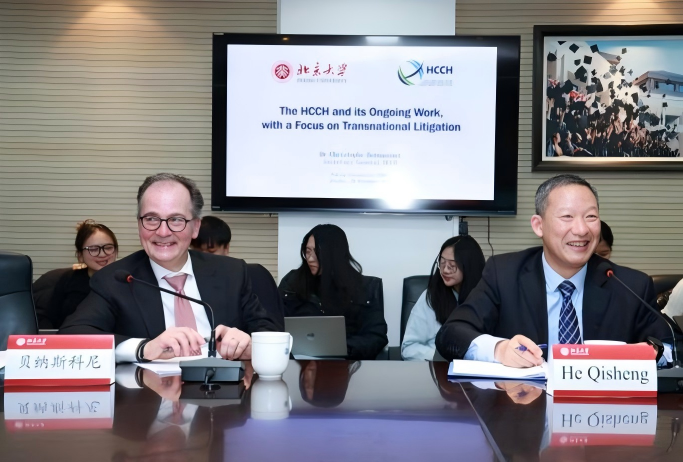
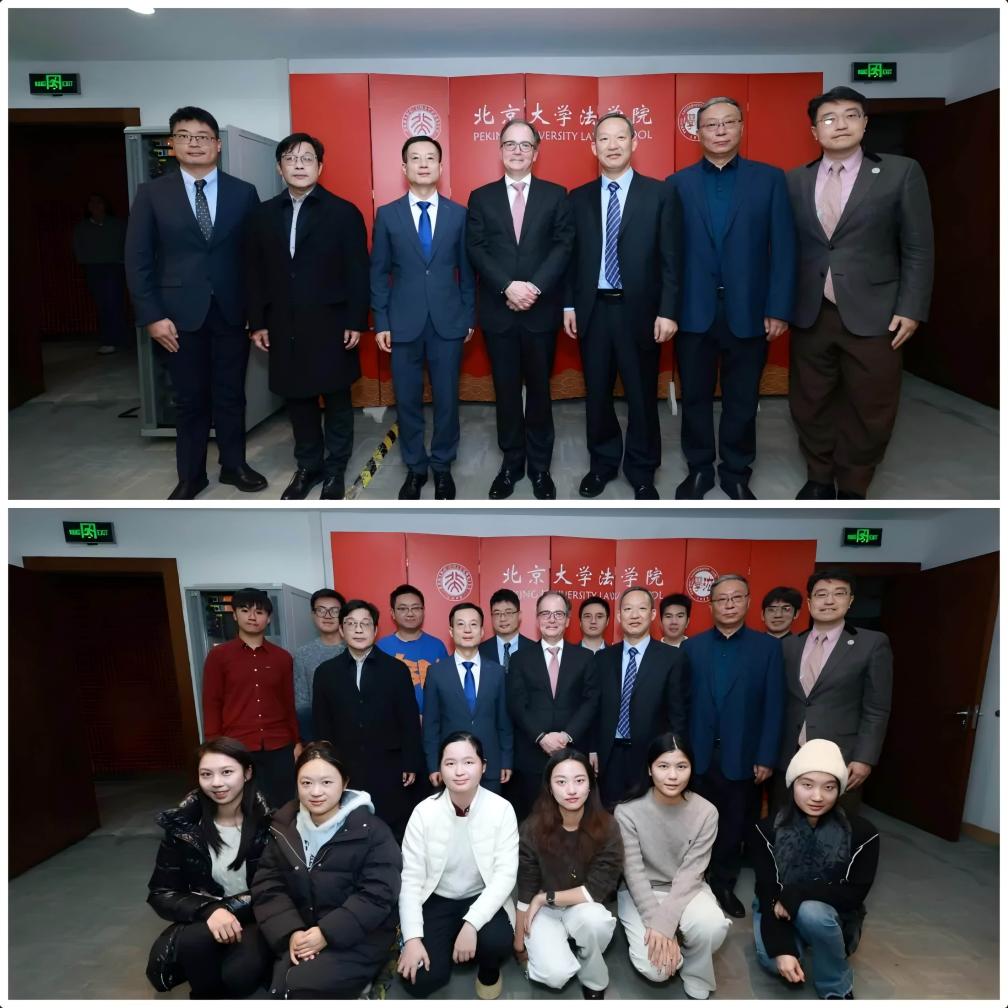
Prior to the lecture, Prof. Guo Li, Dean of PKULS, extended a warm welcome to Secretary General Bernasconi. He highlighted the long-standing close cooperation between PKULS and HCCH and expressed hope for further collaboration in research, teaching, and practice. Subsequently, Dean Guo Li and Secretary General Bernasconi signed a cooperation agreement.
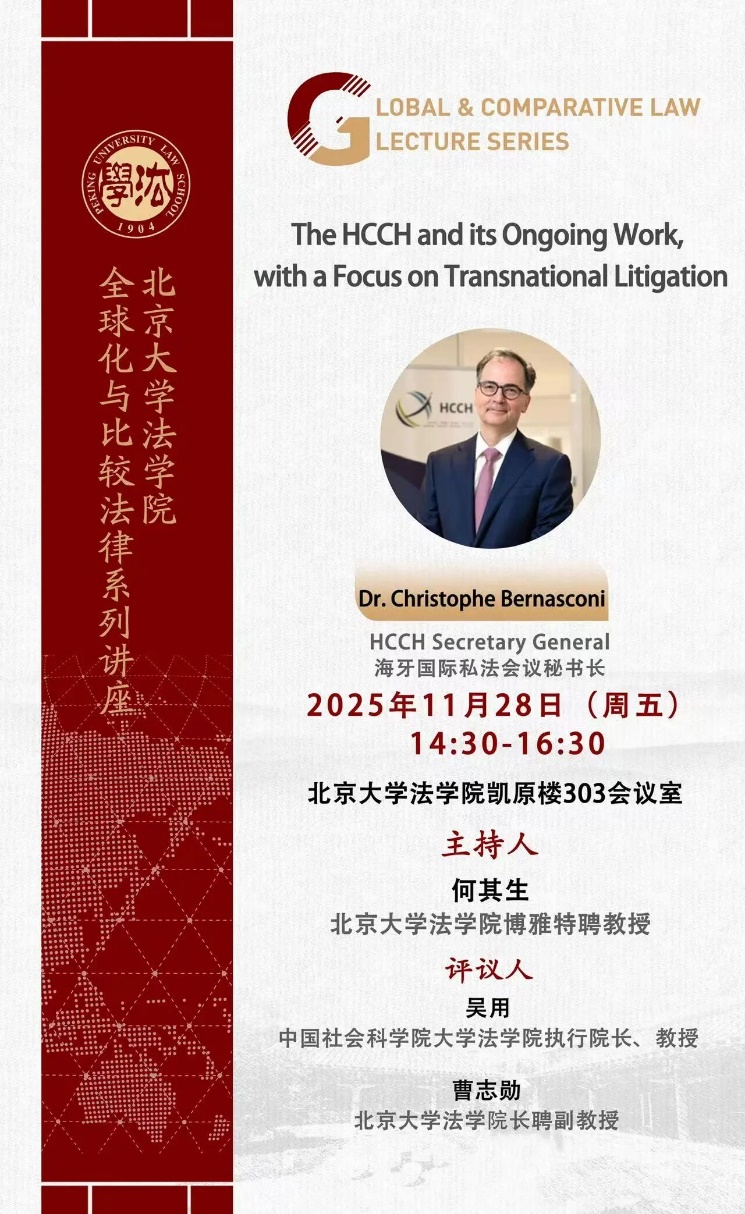
This article summarizes the key points of the lecture.
Dr. Bernasconi:
I. Overview of the HCCH
(I) Historical Development
The HCCH dates back to 1893, when Tobias Asser initiated the first conference in The Hague with 13 participating countries, focusing on civil procedure and jurisdiction. The first Hague Convention—the Civil Procedure Convention—was adopted in 1896. Over the following decades, the HCCH convened repeatedly, leading to numerous treaties on private international law issues.
The HCCH Statute, adopted at the 7th session in 1951 and effective in 1955, established the HCCH as a permanent intergovernmental organization. To date, the HCCH has facilitated the creation and implementation of over 40 conventions and legal instruments.
(II) Core Mission
Article 1 of the Statute defines the HCCH’s mission as progressively unifying rules of private international law to enhance certainty and predictability in cross-border legal relations. In addition to traditional focuses—jurisdiction, applicable law, and recognition/enforcement of judgments—the HCCH emphasizes “cross-border judicial cooperation,” forming its “3+1” core issues.
As a leading organization in private international law, the HCCH builds consensus among nations and promotes the development and implementation of international conventions, embodying effective pragmatic multilateralism. This aligns closely with the values of China’s Global Governance Initiative (GGI).
(III) Membership
The HCCH comprises 92 members, with its work extending to 158 countries. China became a member on July 3, 1987, and is currently a party to the Apostille, Service, Evidence, and Adoption Conventions. It signed the Choice of Court Agreements Convention in September 2017.
(IV) Convention Development
The HCCH focuses on three areas:
International Family and Child Protection (e.g., Adoption, Child Abduction, and Child Protection Conventions).
International Civil Procedure (e.g., Apostille, Evidence, and Judgments Conventions).
International Commercial and Digital Law (e.g., Trusts and Securities Conventions).
Current key projects include parallel proceedings, digital currencies, and carbon emission market rules.
Convention development follows a rigorous six-stage process: proposal, expert discussions, drafting, special commission review, diplomatic negotiations, and post-adoption implementation and monitoring.

II. Key Conventions and Drafts

(I) Choice of Court Agreements Convention (2005)
Effective October 1, 2015, this convention establishes three core principles:
The chosen court must hear the case.
Non-chosen courts must suspend or dismiss proceedings.
Judgments from chosen courts shall be recognized and enforced.
It affirms party autonomy, enhances legal certainty in international transactions, reduces parallel litigation risks, and offers a viable alternative to arbitration.
(II) Judgments Convention (2019)
Effective September 1, 2023, its key provisions include:
Recognition and enforcement of judgments among contracting states.
Indirect jurisdiction as a basis for recognition.
Grounds for refusal (e.g., public policy violations).
A 12-month opt-out period for new member relations.
This convention complements the Choice of Court Agreements Convention and aims to streamline cross-border judgment enforcement.
(III) Jurisdiction Project
This project addresses parallel and related proceedings to avoid judicial conflicts. Since 2021, working groups have developed direct jurisdiction rules, forum non conveniens principles, and judicial cooperation mechanisms. A draft convention is now open for global feedback.
Panel Discussion:
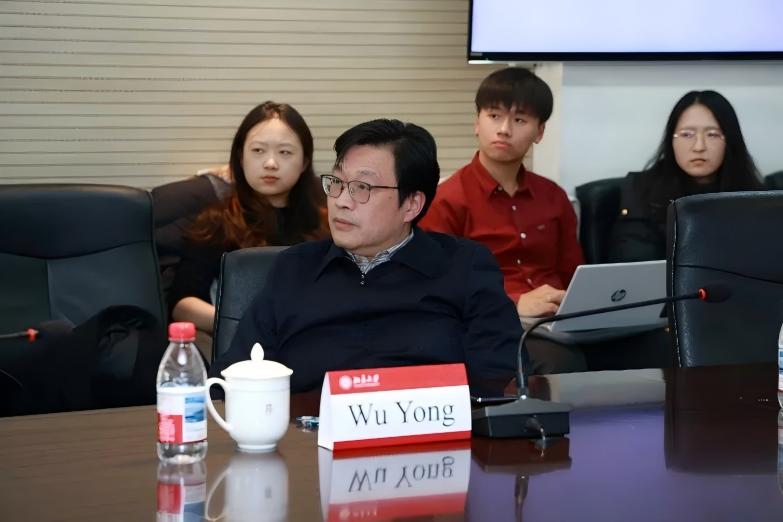
Wu Yong:
The HCCH has significantly advanced the unification of private international law. However, amid rising anti-globalization sentiments, some conventions have underperformed. The HCCH must explore new strategies to foster consensus.
Bernasconi:
As cross-border activities increase, the HCCH’s role in promoting legal cooperation remains irreplaceable. Despite global uncertainties, the HCCH continues to advance projects efficiently, such as the Jurisdiction Project, and welcomes global input to refine conventions.
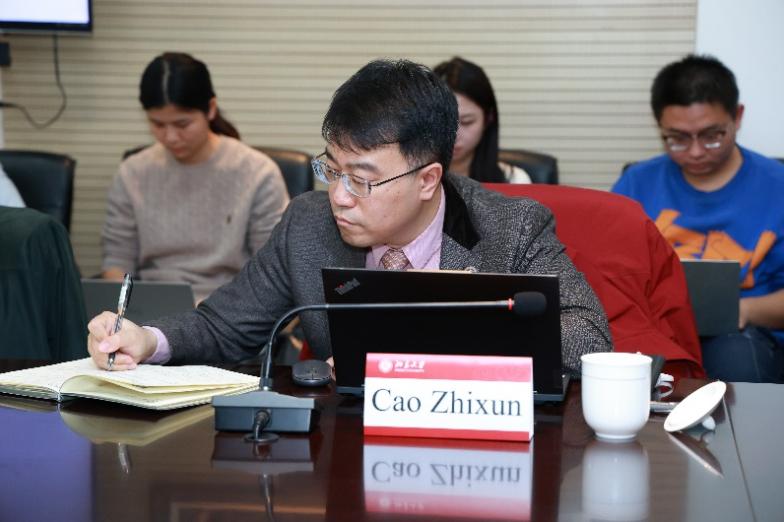
Cao Zhixun:
How do you view jurisdictions like Singapore becoming preferred litigation venues?
How do you balance traditional issues with emerging challenges?
Bernasconi:
A jurisdiction’s success depends on judicial expertise and credibility. China has the potential to become a leading dispute resolution hub.
The HCCH prioritizes capacity and dedication. Young scholars and students can contribute through research and internships, creating a win-win for talent development and HCCH projects.
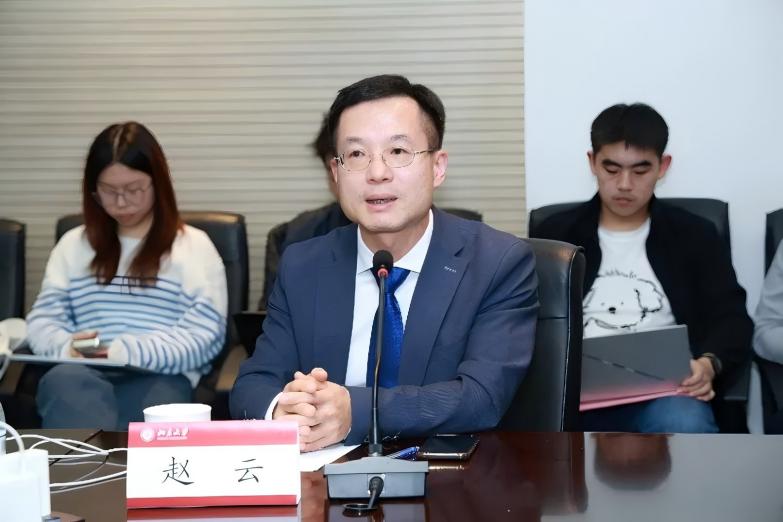
Zhao Yun:
The HCCH combines “soft law” and “hard law” to excel in multiple fields. China is playing an increasingly active role in HCCH negotiations. Further cooperation with PKULS could include joint research and internships.
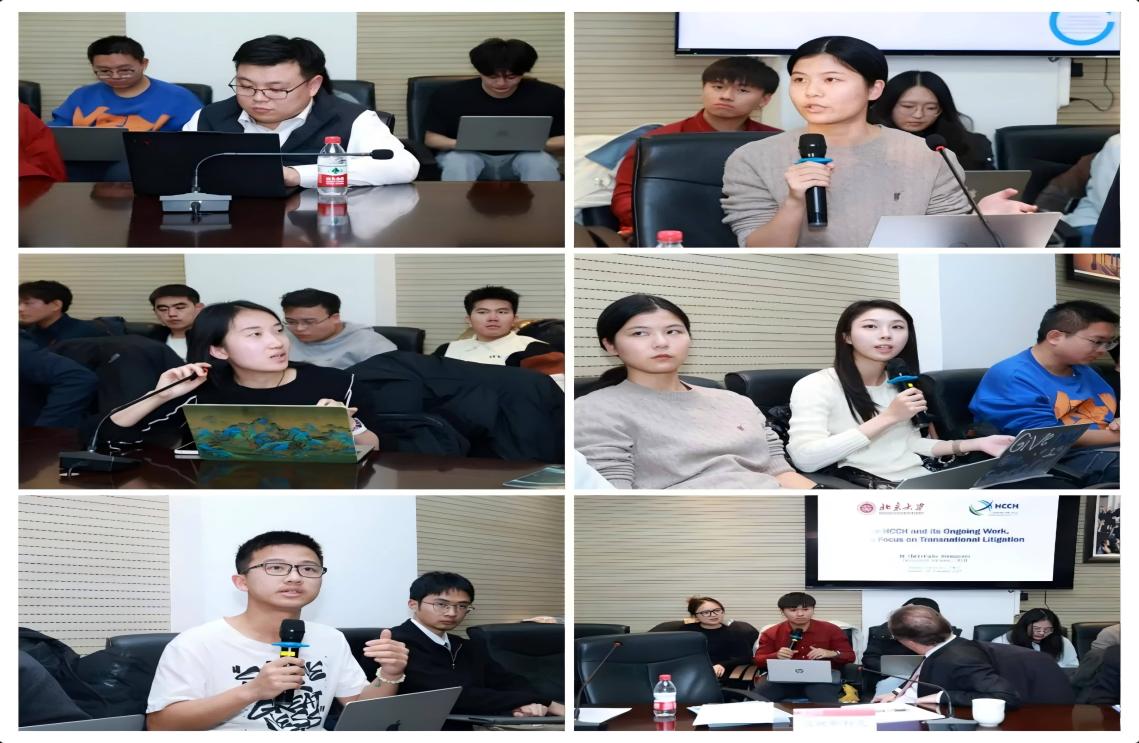
Q&A Session:
Q1: Why are there fewer parties to the Judgments Convention than the New York Convention?
Bernasconi: The New York Convention (1958) has had decades to gain acceptance. The Judgments Convention (2019) needs time. Its value will become evident as more countries join.
Q2: Will there be unified jurisdiction rules for antitrust or IP?
Bernasconi: Current conventions exclude IP and antitrust due to lack of consensus. However, future instruments may address these areas.
Q3: How do you address distrust in foreign judgments?
Bernasconi: Judicial independence can mitigate distrust. Providing diverse dispute resolution options is key. Convention effectiveness will unfold over the next 10–20 years.
Q4: How does the HCCH keep rules relevant for emerging areas like digital currencies?
Bernasconi: Regular reviews ensure conventions adapt to new technologies without textual changes.
Q5: How can one intern at the HCCH?
Bernasconi: Apply via the HCCH website. Demonstrate broad interest and a passion for contributing to international law.
Translated by: Guo Zhongqi
Edited by: Zhang Wenyi